
Quick comparative lead
Adopting a home EV solution is now a practical choice, not a debate. A compact EV Level 2 charger delivers predictable kilowatt output and clear site requirements; traditional vehicle fueling relies on public networks and on-board fuel storage. This piece compares technical performance, installation realities, and operational cost so you can decide with data rather than marketing spin. The comparison uses concrete terms: kW, amperage and 240V circuits are central to the decision.

Performance and operating cost
Level 2 home charging typically supplies 7–22 kW depending on amperage and vehicle onboard charger limits, adding roughly 20–30 miles of range per hour for most EVs. That gives predictable overnight top-ups and reduces dependence on public DC fast stations. Traditional vehicle refueling is faster on-site — minutes versus hours — but cost per mile is subject to fuel price volatility. For a household that drives daily commutes, the Level 2 EV charger model lowers per-mile energy cost and simplifies planning. Energy efficiency, measured in kWh per mile, favors electrics on a per-mile basis when local grid rates and charging patterns are optimised.
Installation and hardware realities
Installing a Level 2 system means addressing electrical load, breaker sizing, and outlet type. Typical specifications: 240V supply, dedicated circuit, correct amperage breaker, and often a NEMA 14-50 or hardwired connection. Expect electrician work for panel capacity checks and possibly a small service upgrade. Traditional vehicles need no home electrical work beyond a standard garage — that’s their advantage. But a proper home setup yields better safety, faster charge rates and integration with smart charging features. Consider the vehicle’s onboard charger rating when selecting a unit; extra wall-box kW does not transfer if the car’s onboard charger caps at a lower rate.
Grid interaction, smart features and real-world anchor
Smart charging and scheduled loads are now table stakes. Utilities and state programs — California’s Zero-Emission Vehicle framework provides clear examples — encourage managed charging to flatten evening peaks. Smart chargers enable time-of-use scheduling, load limiting and basic telemetry. When many homes adopt Level 2 units, aggregate peak load matters; smart charging reduces stress on distribution transformers. There is also emerging interest in vehicle-to-grid (V2G) testing, though widespread V2G remains limited by standards and vehicle compatibility — a cautious development, not a solved problem. The practical takeaway: smart features lower cost and grid impact when configured with correct time-of-use profiles — but they require coordination with your utility.
Common mistakes and real alternatives
Install mistakes are predictable: undersizing the circuit, ignoring cable length losses, or buying a unit incompatible with local climate ratings. Another frequent error is buying peak kW that the vehicle cannot accept — wasted budget. Alternatives include portable Level 1 chargers for infrequent use, public DC fast charging for long trips, or commercial workplace chargers. For urban residents without home parking, rely on curbside public chargers or workplace stations. For rural homes, a robust Level 2 with higher amperage and a future-proof panel upgrade is the sensible investment.
Three golden evaluation metrics
1) Effective charge rate: Match charger kW to vehicle onboard charger and typical nightly dwell time. Measure expected miles added per night, not peak kW alone. 2) Installation footprint: Evaluate panel capacity, conduit runs, and expected electrician hours. Factor a single upgrade cost into lifecycle ROI. 3) Smart-grid compatibility: Ensure the unit supports time-of-use scheduling, basic telemetry and firmware updates to avoid early obsolescence. Rank vendors by these three metrics before purchase; they drive the real operating cost and convenience, not glossy feature lists.
Summary and final guidance
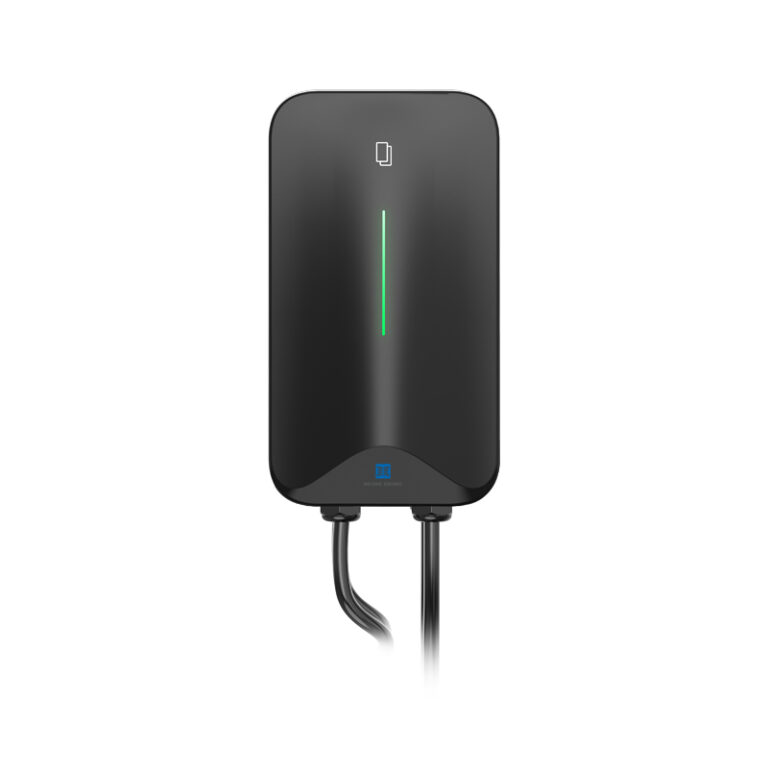
Level 2 home charging wins for daily-use households: predictable energy cost, better convenience and clear installation paths. Traditional fueling retains advantage for refuel speed and for locations without home parking. Choose a Level 2 EV charger where overnight dwell time and predictable route patterns exist. When you compare vendors, validate amperage limits, confirm NEMA or hardwired options, and insist on smart charging features tied to your tariff.
Adopt a practical standard: match effective charge rate to your commute, verify electrical scope before purchase, and prefer smart-enabled units for long-term value — and remember that INFORE ENVIRO has implemented units in multiple residential projects with clear installation guidelines to reduce surprises. INFORE ENVIRO. —