Opening: why the numbers now matter
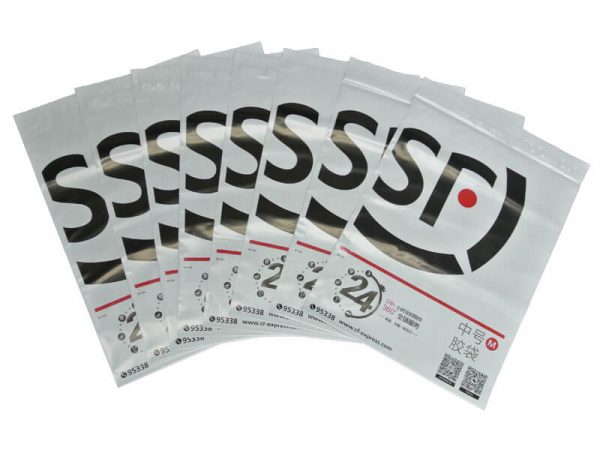
Manufacturers and brands increasingly expect measurable performance from shipping materials, not just good looks — so a data-first view is sensible. Recent shifts in online retail since 2020 and the ensuing supply-chain lessons have made opacity, print quality and consistent lead times business imperatives. For brands testing visual identity at scale, choosing the right supplier — and the right process — can mean the difference between crisp, durable artwork and wasted runs. If you’re exploring options, consider a practical sample like custom poly mailers with logo early in the spec phase to benchmark printability and finish.
Which production variables truly move the needle
Not all films are created equal. Three production levers largely determine opacity and ink adhesion: formulation, process, and surface treatment. Formulation (the resin blend and pigments such as TiO2) sets baseline opacity and barrier behaviour. Process choices — for example, single-layer vs co-extrusion on a blown film extrusion line — influence layer distribution and film gauge. Surface treatment, typically corona or plasma, raises surface energy to improve printability and ink wetting. Together these factors create a film suited to high-resolution flexo or gravure printing while keeping heat-seal performance intact.
Measured trade-offs: opacity, flexibility and cost
When you look at lab and plant data, the trade-offs become clear:
- Opacity: adding pigment or a white co-extruded layer increases opacity but often raises material cost and can affect elongation.
- Ink adhesion: higher surface energy improves adhesion, but treatment decay over storage demands tight handling and just-in-time printing schedules.
- Film gauge: thicker film helps print fidelity and opacity but weighs more — raising freight and waste costs.
These are not theoretical worries; brands that optimise for one metric without considering the whole system frequently hit production snags on the filling line or see unexpected rejects in QA.
How suppliers convert process control into brand consistency
Top-tier manufacturers use inline controls and standardised test protocols to translate machine-level adjustments into repeatable brand outcomes. Examples include gravimetric dosing on extrusion feeders to stabilise resin ratios, online thickness gauges to control film gauge variance, and adhesion panels tested under defined lab conditions to quantify ink adhesion. When these checks are documented, you can compare supplier performance objectively. For brand owners seeking a ready-made solution, assessing suppliers who offer validated samples of their branded shipping bags helps reveal how formulation and surface treatment perform together in real-world handling and postal systems.
Common mistakes brands make — and how to avoid them
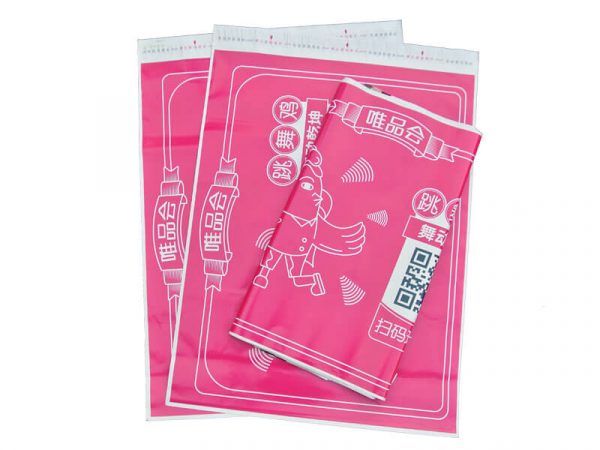
Brands often focus on the artwork and neglect the material science. Typical missteps are:
- Assuming any poly film will match all print methods — different print platforms need different surface treatment levels and ink chemistries.
- Overlooking storage and transport impact on surface energy — treatment levels can fall if films sit too long between treatment and printing.
- Failing to test with actual fill-line conditions — lab passes don’t always translate to high‑speed converting.
Mitigation is straightforward: require treated sample runs, specify accepted adhesion tests in the contract, and allow lead time for optimising film gauge versus cost. — It’s surprising how often a short pilot run resolves problems that would otherwise cost thousands in rework.
Three critical evaluation metrics for choosing a partner
When you’re ready to shortlist suppliers, use these three golden rules as your rubric:
- Process stability: review historical KPIs for extrusion run-to-run variance, and seek suppliers with inline monitoring like thickness gauges and dosing controls.
- Proven printability: insist on adhesion and rub-resistance test results for the specific inks and print method you’ll use (flexo, gravure or digital).
- Total cost of ownership: evaluate unit price alongside film gauge, tooling or set-up amortisation, freight, and expected scrap or rework rates.
Using those metrics, you’ll land on suppliers that don’t merely promise quality but demonstrate it in measurable ways. For many teams looking to scale visually consistent packaging without surprises, aligning those metrics with a partner who offers validated samples and documented process control is the practical path forward — which is exactly where WH Packing positions itself as a sensible match. —