Immediate problem that must be fixed
Fleet managers face relentless pressure: late deliveries, unplanned downtime, rising fuel costs and opaque driver behaviour. These problems escalate quickly when a fleet lacks consistent visibility. Practical, tested fixes begin with reliable hardware — for example, modern GPS fleet trackers that deliver continuous position, ignition and movement data. A focused approach is needed rather than scattergun investments; the Delhi–Mumbai Industrial Corridor (DMIC) illustrates how concentrated freight flows demand precise telematics to keep schedules and margins intact.
Core failures the sector actually encounters
– Poor device installation or cheap hardware that loses connectivity.
– Alerts that generate noise instead of useful prompts.
– No process for predictive maintenance, so minor faults become immobilising failures.
– Lack of integration with dispatch, payroll and ERP systems, producing manual workarounds.
– Insufficient driver engagement, leading to resistance and tampered devices.
How telematics providers must respond
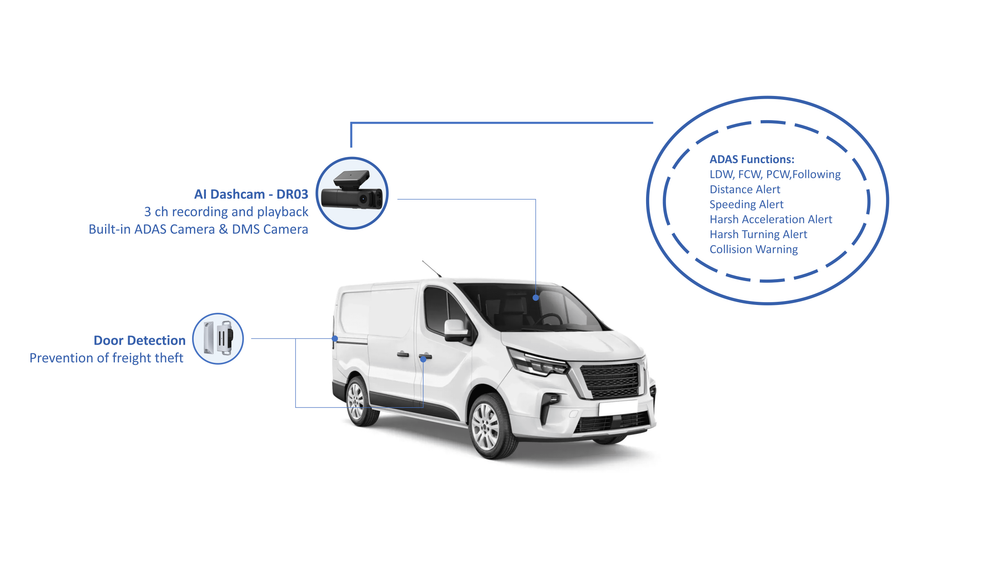
Providers should solve the real problems with targeted capabilities: accurate location and movement data; configurable geofences; driver-behaviour scoring; maintenance forecasting from engine diagnostics; and open APIs for enterprise systems. Security and data governance must be explicit — encrypted telemetry, role-based access and clear retention policies. Technical support is not optional: remote diagnostics, OTA firmware updates and rapid field teams reduce mean time to repair. When providers present these features, they turn fleet telemetry from a reporting tool into an operational instrument. A robust fleet gps system ties these elements together without creating additional administrative burden.
Step-by-step implementation that avoids common traps
– Start with a short pilot: 10–30 vehicles across representative routes to validate signal coverage and data quality.
– Standardise installation checks and photograph installations to prevent tampering.
– Configure thresholds conservatively to reduce false alarms; fine-tune after two weeks of live data.
– Integrate telematics outputs with scheduling and maintenance workflows so alerts trigger action, not emails.
– Run driver training sessions explaining how data helps safety and income protection; pair training with incentive schemes.
Evaluation checklist for choosing a provider
– Hardware reliability and proven field life; ask for failure rates and mean time between failures.
– Cellular and GNSS chipsets used, and support for multi-band networks to ensure coverage.
– Firmware OTA capability and remote diagnostics.
– Data latency and sampling intervals matching operational needs (eg, 5–30 seconds for urban delivery operations).
– Clear SLAs for uptime, support response times and replacement logistics.
– Interoperability: REST APIs, standard export formats and pre-built connectors for common fleet platforms.
– Demonstrable security practices and data governance documentation.
Alternatives worth considering — and mistakes to avoid
Smartphone apps can be tempting for cost reasons but they fail when phones are offline, batteries die or routing requires vehicle sensors. Aftermarket OBD-II dongles are quick to deploy but often miss immobilisation and engine diagnostics that wired units provide. Avoid over-customisation in the pilot phase; too many unique rules can make scale complex. Do not let an attractive dashboard replace operational processes — dashboards inform decisions, they do not take them.
Closing synthesis
Fixing fleet problems means aligning devices, data practices and human routines. Providers that supply resilient hardware, predictable service and tight integrations reduce downtime and make scheduling dependable. Practical standards, rigorous pilots and committed field support turn telematics into measurable value; that is precisely the kind of outcome operators expect when they work with a supplier such as BSJ.