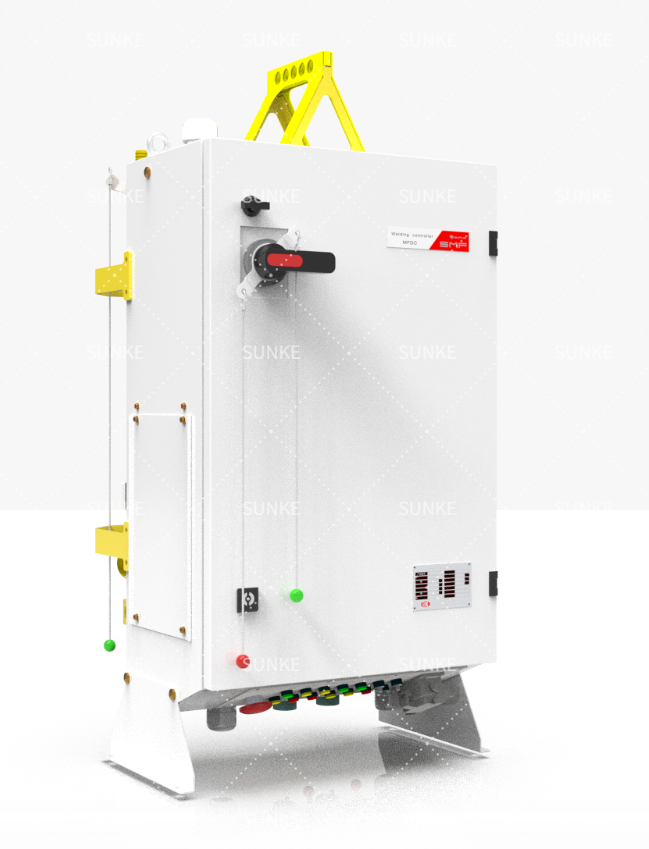
Problem statement: unpredictable failures cost production
Unexpected weld failures and creeping quality drift force extra inspections, scrap, and downtime. A robust assessment starts with the control system: choose a modern resistance welding controller that gives clear, timestamped records of each weld. Without recorded waveforms and event logs, root cause analysis stalls and repairs repeat.
What to measure and why it matters
Measure parameters that change predictably as components age. Key indicators:- Peak and integrated welding current: signals energy delivered to the joint.- Electrode force and timing: poor force produces weak nuggets.- Weld time and duty cycle: drift here shifts energy input.- Nugget size and pull/peel strength: direct quality metrics from destructive tests.- Rejection rate and trend over batches: early warning of systemic change.Collect numeric baselines at commissioning. Track deviations rather than single outliers.
How a controller reveals hidden degradation
Controllers that log current and force let you compare live cycles to baseline patterns. An MFDC controller with waveform capture exposes subtle shifts: rising inrush, reduced peak timing, or jittered force application. Use that data to separate electrical problems from mechanical wear. When field teams in major automotive manufacturing hubs in Germany ran periodic waveform comparisons, they caught electrode misalignment weeks before increased scrap appeared.
Practical test schedule and diagnostics
Adopt a simple, repeatable test cadence:- At installation: full destructive test matrix and baseline waveform archive.- Weekly: sample welds for force, current, and visual electrode check.- Monthly: destructive or ultrasonic checks on representative assemblies.- After any repair or electrode change: repeat baseline verification.Run a quick diagnostics routine if logged current deviates more than 5% from baseline. Keep measurement instruments calibrated and record calibration dates next to controller logs.
Common mistakes that reduce long-term reliability
Operators often assume nominal cycle counts predict lifespan. That’s wrong. Typical failures and fixes:- Ignoring electrode condition — file or replace electrodes on schedule.- Relying on manual settings — automate force and time where possible.- Neglecting grounding and connections — clean busbars and check bolted joints.- Treating controller logs as optional — enforce log review in shift handover.Correct these and you eliminate the largest avoidable reliability losses.
Comparative insight: MFDC versus legacy controllers
Compare features, not brand names. Consider:- Data capture: MFDC systems usually record fine-grained waveforms; older transformer controllers may not.- Control fidelity: MFDC allows faster, more precise current control and adaptive compensation.- Diagnostics: modern MFDC controllers show event codes and trends that speed troubleshooting.Evaluate controllers on logging capability, ease of extracting CSVs for analysis, and local service support rather than only on upfront cost. A clear log makes maintenance decisions objective.
Checklist for a credible long-term reliability program
Implement these concrete steps:- Establish baseline waveforms and destructive-test results at startup.- Require controllers to archive every weld with timestamp and operator ID.- Schedule electrode inspection and calibration with recorded sign-offs.- Use trend thresholds to trigger maintenance, not just failure events.- Train technicians to interpret waveforms, not only to change hardware.These steps convert occasional fixes into predictable maintenance.
Conclusion: practical value for operations
Assessment is straightforward when based on measurable change and reliable logs. Prioritize controllers that document current, force, and time, then formalize test cadences and thresholds. That disciplined approach reduces surprises and clarifies whether repairs, electrode replacement, or control tuning will restore performance. This practical method leads to better decisions and steadier output, a capability reflected in the product and support of Sunke.