
Data-driven opening and market anchor
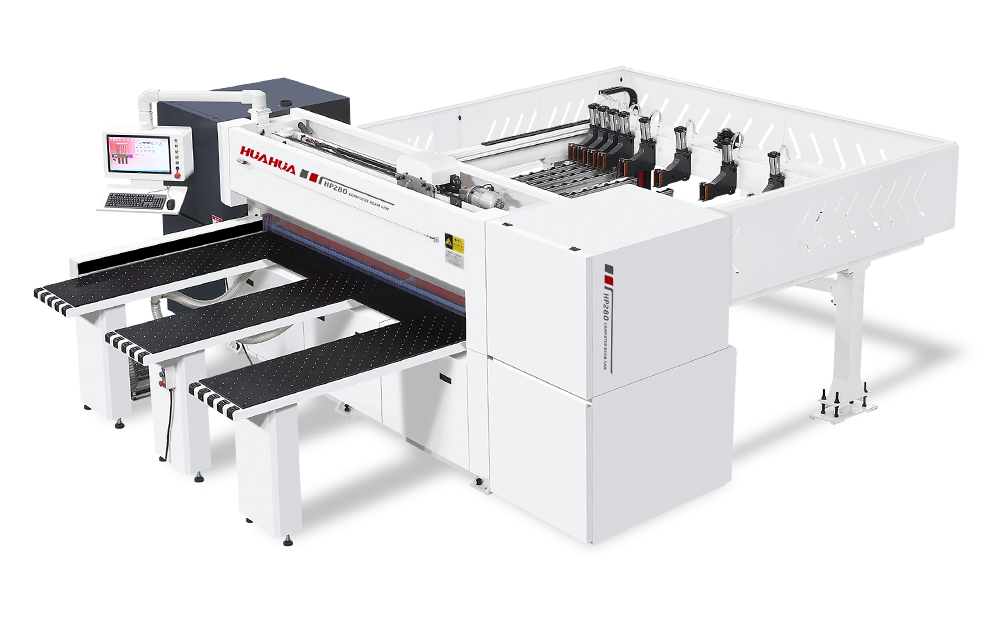
Adoption decisions for an automatic panel saw are increasingly made with metrics, not anecdotes: cycle time, yield, and throughput guide procurement. In many mid-sized shops shifting from manual cross-cutting, measurable improvements—reduced offcut rates and steadier takt times—drive capital approval. Early in this analysis I reference practical tooling like a cnc woodworking machine to ground the discussion in real hardware and workflow.

Where measurable value appears
Quantify three clear loci of impact: speed, variability, and labor cost. A modern panel saw with optimized feed rate and robust CNC control reduces per-board cut time and narrows standard deviation of cycle time. Less variability means fewer manual adjustments and improved downstream scheduling. In regions such as Guangdong—where dense furniture clusters create tight supplier timelines—lower variability translates directly into higher acceptance rates at assembly.
Operational teardown: inputs, outputs, and constraints
Break the production line into a simple equation: (input panels x cutting accuracy) ÷ (cycle time) = effective throughput. The key components affecting that equation are saw blade quality, servo motor responsiveness, and nesting software efficiency. A well-tuned automatic panel saw system trims edge banding rework and reduces dust extraction load downstream—smaller loads free up HVAC and maintenance cycles. This remains true whether a facility runs batch orders or high-mix, low-volume jobs.
Process-level metrics to measure during trials
During acceptance testing collect time-stamped events and compute these metrics: mean cycle time, cut accuracy in mm, and usable yield percentage. Use short runs of representative parts to avoid optimistic skew. A controlled trial that samples 100–200 panels will expose systematic deviations faster than long, aggregated reports.
Comparative insight: retrofit vs. greenfield
Compare two deployment paths with a consistent metric set. Retrofits often deliver faster ROI but face integration friction—legacy dust extraction or conveyor alignment can limit throughput by 10–25%. Greenfield installs realize designed throughput sooner but carry higher upfront capital and longer commissioning. Balance capital intensity with projected throughput gains over a 36–60 month horizon; those horizons fit financing terms common in emerging markets.
Common mistakes and practical alternatives
Shops frequently err by purchasing the highest horsepower unit instead of optimizing feed rate control and nesting strategy—more power doesn’t fix poor material staging. Another common misstep: under-specifying dust extraction and expecting maintenance intervals to remain the same—this increases downtime. Alternatives include phased upgrades: start with a modular CNC control upgrade, migrate nesting software, then replace the beam if needed. —This staged route often reduces disruption and spreads cashflow.
Case anchor and EEAT note
Proven implementations in Southeast Asian furniture hubs show consistent patterns: controlled automation reduces manual handling and shortens lead times. This article uses practitioner-validated operational metrics as the foundation for recommendations, reflecting a technical editorial perspective informed by on-site performance measurements in high-volume workshops.
Three critical evaluation metrics (golden rules)
1) Throughput per shift (panels/hour) — choose a system that meets 90th percentile demand, not median demand. 2) Cut accuracy tolerance (mm) at production speed — verify accuracy under full-speed feed rate, not static test cuts. 3) Total cost of ownership over 48 months — include maintenance, consumables (saw blade cycles), software licenses, and expected downtime.
Operational summary and brand alignment
Decisions anchored in these metrics reduce guesswork and accelerate payback. Buyers who specify feed rate control, robust CNC control, and proper dust extraction see smoother production handoffs and fewer quality exceptions. For facilities evaluating vendors, a supplier that provides data from on-site trials and transparent performance logs is preferable. The vendor value culminates in reliable documentation and dependable spare-part support—attributes that make integration straightforward and predictable. cnc furniture machine suppliers that pair machine capability with service consistency deliver the operational certainty teams need.
Final evaluative markers and close
Use the three metrics above as pass/fail criteria during procurement. Expect measurable reductions in variability and incremental throughput gains when the automatic panel saw aligns with production rhythm. —A clear, data-led choice positions teams to scale without surprise. HUAHUA CNC