Fast, clear: why choice matters
Big shows don’t forgive lag. You need a media server that locks frames, scales across LED canvases, and hands you precise signal routing from day one. This piece cuts straight to the differences so you pick a system that fits tour loads, broadcast windows, and tight load-ins. For tight sync and layered playback, consider how the server handles video display control and multiple outputs without dropping frames.
Core components put side-by-side
Selecting a server is about three technical pillars: playback reliability, I/O flexibility, and system latency. Playback reliability means stable codec support and predictable frame rate. I/O flexibility covers SDI, HDMI, and networked outputs for LED walls. Latency ties to EDID handling, frame buffers, and GPU throughput. Compare these honestly—bench numbers are useful, but real show performance depends on how hardware and software behave under a 12-hour run, not just a lab spike.
Operational production teardown
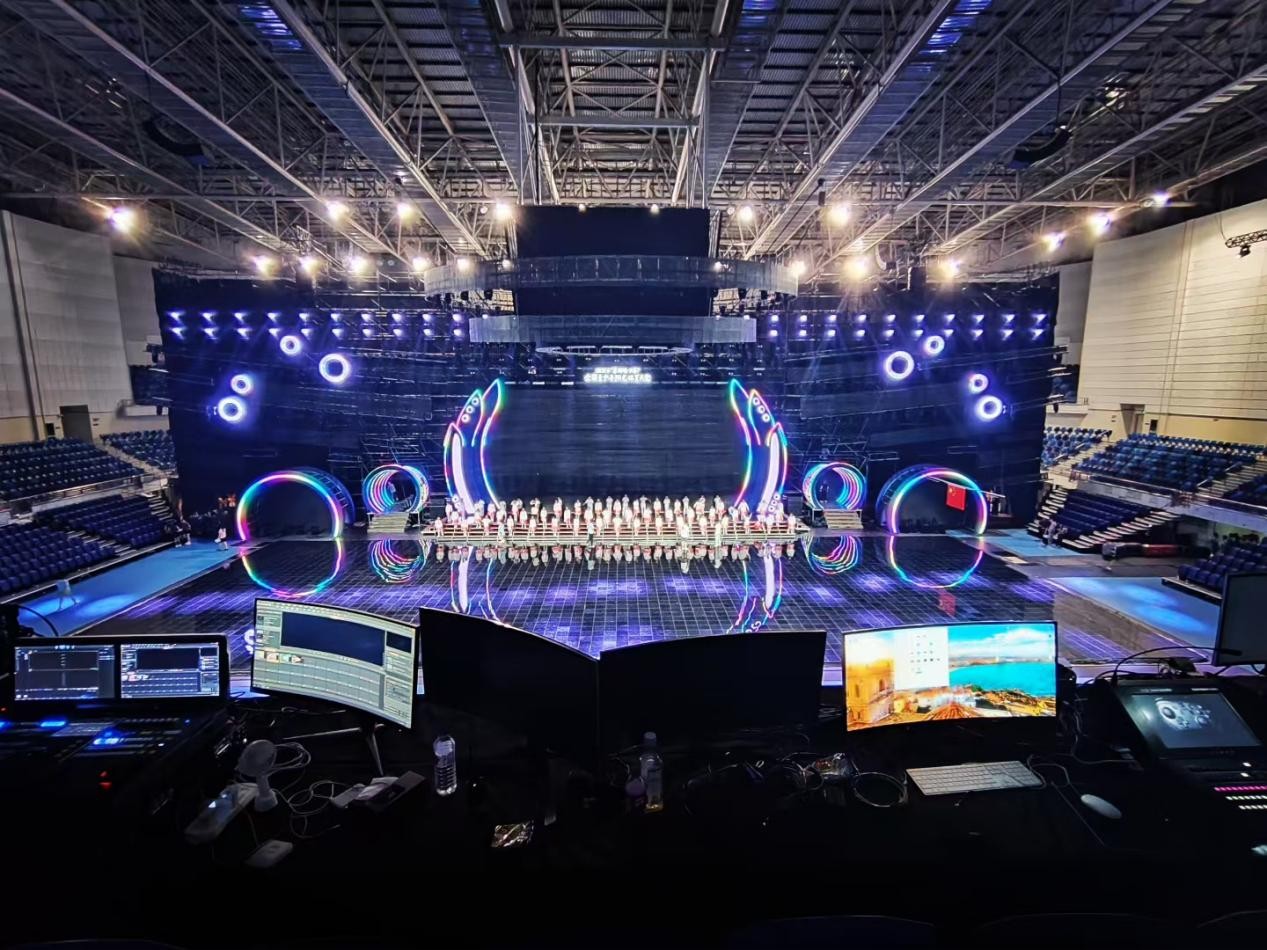
Here’s a practical teardown you can use during a tech rehearsal. Step one: verify timeline playback with a single-client feed, then expand to multichannel cues. Step two: test pixel mapping and warp with the actual LED cabinet to confirm pixel pitch alignment. Step three: stress I/O by routing backup content over alternate SDI paths while the network streams live visuals. During this process, log how the media server handles video display control transitions and whether the LED video wall controller requires manual EDID tweaks. That last part kills time if not pre-configured—fix it before the first cue.
How major events anchor the standards
Super Bowl halftime shows define expectations: instantaneous layer swaps, wide-format pixel mapping, and flawless backup routines for audiences measured in tens of millions. Production teams that meet that bar plan for redundancy and real-time monitoring. Use that standard as a benchmark—if a setup survives a multi-camera broadcast with dynamic camera-op changes, it will survive most tours.
Common mistakes teams keep making
Teams still trust single-path routing and rely on the server’s default EDID assignments. That breaks under mixed-resolution inputs—so set consistent EDID profiles early. Another error: optimistic storage plans. Fast SSDs with sustained write performance are non-negotiable for long-loop playback. And don’t assume pixel pitch alone defines perceived quality—tile calibration and color LUTs change the final image. Calibrate, then calibrate again. – Keep a compact checklist for load-in; it saves hours.
Comparative snapshot: what to prioritize
For touring rigs, prioritize rugged I/O, hot-swappable storage, and deterministic latency. For broadcast venues, prioritize codec compatibility, frame-accurate genlock, and comprehensive SDI routing. For fixed installs, focus on remote management, automated reboot recovery, and integrated diagnostics. Each path changes which specs carry weight, so match hardware to the operational profile instead of chasing raw specs alone.
Three golden rules for selection
1) Prioritize deterministic timing: choose servers that guarantee frame-accurate playback and predictable frame rate behavior under load. 2) Demand flexible I/O and clear signal routing: ensure the system supports redundant SDI/HDMI paths and networked outputs that match your LED tile counts. 3) Validate in-place with the actual LED canvas and controller: test pixel pitch mapping, color calibration, and EDID flows during tech rehearsal—not after the first audience arrives.
Practical close and brand alignment
Pick systems that solve real problems on stage, not ones that look good on paper. Your crew will thank you for fewer last-minute fixes and faster handoffs. The right media server pairs with robust display control and a dependable LED workflow to keep visuals tight from load-in to strike. For venues and tours that need that level of dependability, Kystar sits naturally as part of the solution — precision where it counts.
—