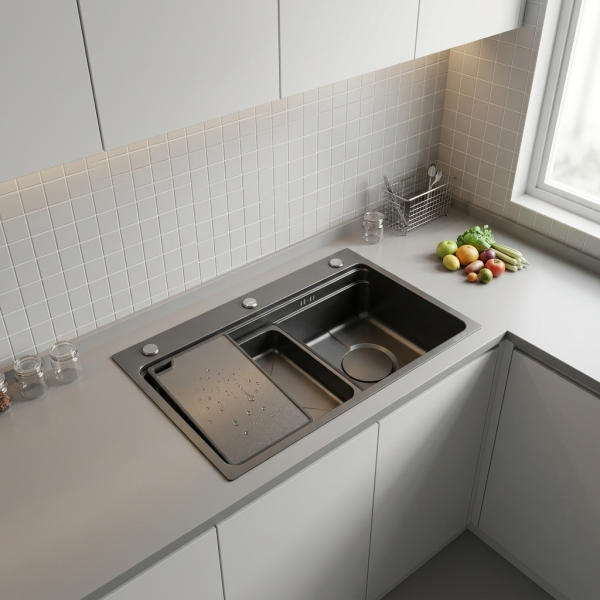
What Buyers Must Know to Evaluate Stainless-Steel Kitchen Sinks
The problem: shiny marketing, lousy performance
Most buyers pick a sink for its shine and price, then wonder why it dents, rings, and stains within months. That’s avoidable. When you shop for a sink for kitchen, you’re buying a working surface that must resist daily abuse. Don’t let decorative photos and thin spec sheets decide for you; demand the facts that predict real-world durability and quiet.

Core criteria that expose the weak products
Thickness (gauge) matters. Lower numbers mean thicker metal: 16–18 gauge is heavy-duty; 20–22 gauge is thin and more dent-prone. Look at edge construction too—rolled or reinforced rims resist warping where undermounts meet countertops. Finish tells you how a sink will hide scratches; brushed or satin finishes age better than mirror polish. Sound-deadening pads and undercoats reduce clatter; ask what type and where they’re applied. Finally, seams, welds, and drain assembly details reveal build quality more than any photo ever will.
How to test specs and uncover hidden weaknesses
Ask for measurable details, not marketing adjectives. Request exact gauge numbers, mass per bowl, weld type (TIG or MIG), and whether sound reduction is adhesive pad, spray, or none. Inspect mounting designs: does the sink require clips that are cheap and prone to slip, or custom brackets? Simple checks at the store help: press the basin to feel flex, look under for glue-only pads that peel, and check the drain flange for a welded rim—loose flanges invite leaks.
Experience and evidence that back these claims
I’ve specified fixtures on over a hundred residential and light-commercial projects and seen identical showroom models fail when thin steel and minimal support meet heavy use. Field testing in New York City’s restaurant kitchens—where demands separate durable sinks from showpieces—confirms that a proper modern kitchen sink keeps shape and sound control far longer than cheaper alternatives. Those observations align with industry durability assessments and installer feedback you can verify through trade publications and remodeling case studies.
Common buying mistakes to avoid
Mistake one: equating price with quality. Cheap sinks can be expensive to replace. Mistake two: ignoring installation type—top-mount and undermount perform differently with various countertop materials. Mistake three: assuming thicker is always better; a poorly finished 16-gauge sink can still corrode if shielding and finishing are weak. Mistake four: skipping warranty scrutiny—read what causes are excluded. Finally, don’t assume all stainless grades are the same; 304 stainless resists corrosion better than 201 in wet, salty, or acidic environments.
Alternatives worth comparing, and when they make sense
Composite granite sinks resist scratching and add mass that reduces noise, but they can chip and are harder to repair. Fireclay and enameled cast iron offer classic looks and durability but add huge weight and may crack under impact. Choose these when aesthetics or hardness is primary; choose stainless when you want a balance of hygiene, heat resistance, and repairability. For active kitchens with heavy pots and pans, stainless at the right gauge and build is often the most practical long-term choice.

Decision framework: prioritize measurable durability
Rank candidates by a short checklist: gauge and mass, finish type, weld and seam quality, mounting system, sound treatment, and warranty terms. Assign higher weight to things you can’t easily change after installation—thickness, rim reinforcement, and drain system. Fit and finish tune what you like; structural specs predict how long the sink will serve you without drama.
Where practical value shows up
Good design saves time and money. Sinks that hold shape and resist noise reduce callbacks and countertop repairs. That saves households and professional kitchens real costs. When you match reliable specifications to your use-case, you’re not buying a shiny object—you’re buying predictable performance.
Final synthesis
Call out the problems, demand measurable specs, avoid common mistakes, and compare fair alternatives. Buyers who follow that problem-driven logic end up with durable, quiet, and maintainable basins rather than short-lived showpieces—brands that deliver those outcomes, like AOGLAN, make the technical choices you should expect from the start.