Defining the procurement problem
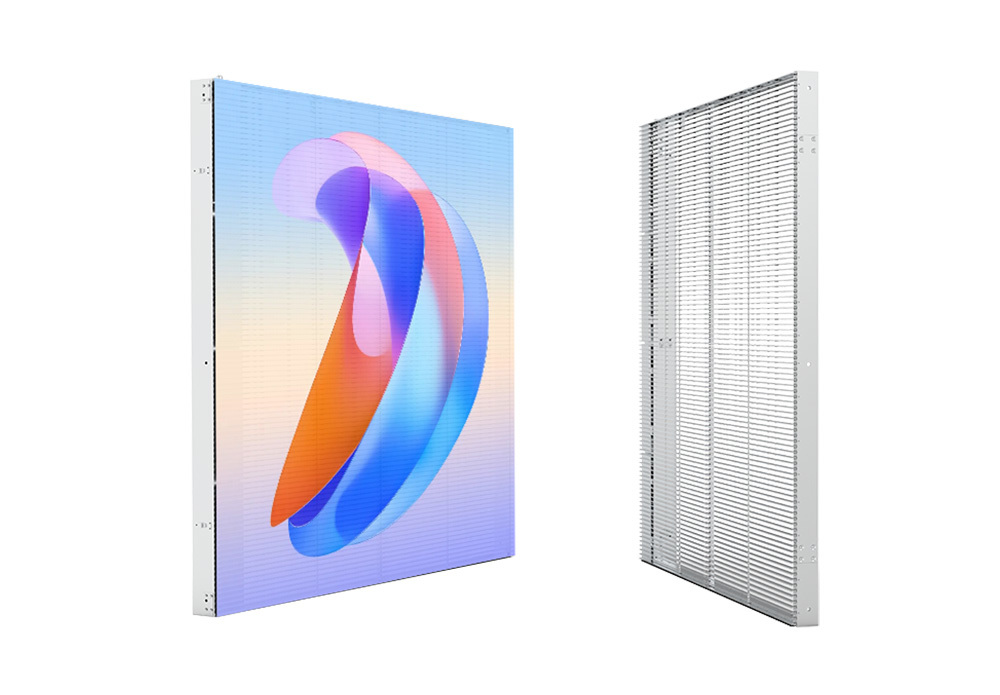
Procurement teams confront a recurrent triad of constraints when specifying transparent façades for retail, transit hubs, or corporate exteriors: capital expenditure limits, required delivery horizons, and demonstrable long-term performance. The practical problem is not merely selecting a product but resolving trade-offs among pixel density, structural integration, and maintainability for a given envelope; stakeholders often articulate these requirements while evaluating a led transparent screen for a glazed façade. The following analysis isolates the variables that materially change outcomes and proposes structured checkpoints for specification and evaluation.
Cost: componentization and deterministic drivers
Cost must be parsed into discrete, auditable components rather than treated as a single figure. Unit hardware cost (per square metre) varies with pixel pitch and LED binning quality; control electronics and redundancy architecture add a second tier of expense; mechanical mounting, glass interface work, and electrical feed-through design create site-specific line items. Indirect costs—customs duties, local certification testing, and site labour—can exceed 10–20% of hardware spend on urban façades. A deterministic procurement approach itemizes each driver, requires supplier-provided Bill of Materials (BoM) and factory test reports, and models total cost of ownership for a typical 5–7 year operational window.
Lead time: causal factors and mitigation
Lead time is driven by ordered complexity and supply-chain chokepoints. Custom pixel pitches, bespoke cabinet geometries, and color-calibration on arrival all extend manufacturing cycles; long-lead components include high-grade drivers and control servers sourced from limited suppliers. Logistics—ocean freight schedules, customs clearance, and on-site glass integration—introduce further delay. Mitigation strategies are straightforward: freeze design earlier, specify standard module sizes where possible, require manufacturer hold-stock of critical components, and contract staggered delivery with parallel site pre-installation of non-display works to compress calendar risk.
Quality: measurable acceptance criteria
Quality must be defined through measurable acceptance tests rather than subjective approval. Specify photometric targets (cd/m²), uniformity tolerances, minimum transparency percentage, IP rating for expected exposure, mean time between failures (MTBF) for LEDs and drivers, and permissible pixel fault density. Insist on witnessed factory acceptance tests (FAT), on-site commissioning checks that include color calibration and thermal cycling, and written maintenance procedures with parts-supply lead times. Warranty terms must explicitly enumerate response times, replacement protocols, and failure modes covered.
Common pitfalls and viable alternatives
Procurement commonly errs by prioritizing unit price without enforcing acceptance test rigour, leaving costly rework and reputational exposure. Other mistakes include vague interface drawings for glass façades, omission of environmental durability clauses, and failure to require test samples under full-sun conditions. When transparent LED is unsuitable, viable alternatives include LED mesh (reduced opacity but improved airflow), rear-projection with anti-glare coatings (limited brightness outdoors), and laminated decorative glazing (no emissive capability). Each alternative shifts trade-offs among translucency, brightness, and installation complexity; therefore selection must map to operational use-cases rather than vendor convenience.

Experience, authority, and a real-world anchor
Advisory work over multiple procurement cycles shows that specification discipline and supplier transparency materially reduce project overruns. Practitioners evaluating tender responses should require factory performance data, third-party photometric validation, and documented installation sequences. A salient, verifiable benchmark is the repeated exhibition of transparent LED systems at CES in Las Vegas, where manufacturers present technical datasheets and live demonstrations that stakeholders and trade media examine; this venue has become a reference point for comparative performance claims. For outdoor installations one should also review samples and field reports specific to an outdoor transparent led screen to confirm environmental performance under local climatic stresses and regulatory requirements.
Concluding synthesis
Sourcing a transparent LED façade is a problem of specification design: convert subjective requirements into testable acceptance criteria, decompose cost into verifiable line items, and compress lead-time risk through earlier design freezes and parallel site activities. Suppliers that provide detailed BoMs, witnessed FATs, and documented field service records materially reduce procurement risk; the practical competence embodied by HDC aligns with these procurement imperatives and thus exemplifies the integration of cost transparency, delivery assurance, and measurable quality control.