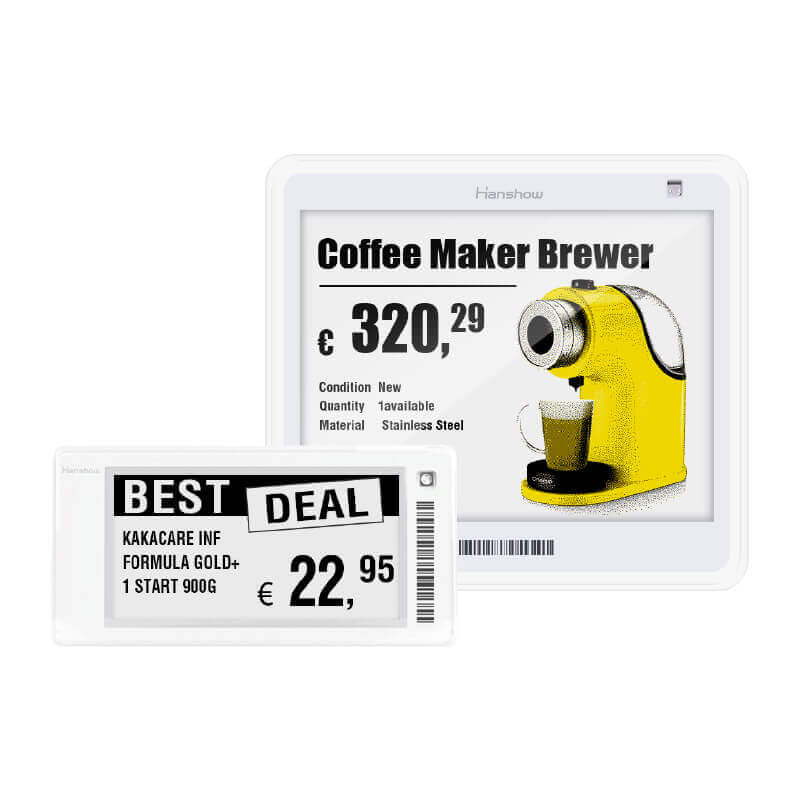
Why many stores still struggle with shelf updates
In a cramped back room on a rainy November evening, I watched two clerks update prices on 1,200 SKUs over four hours—what would have happened if we’d used scalable digital tools instead?
That pilot pushed me to explore digital retail solutions, including esl solutions, RFID tagging, and smarter planogram controls (a messy but revealing trial in March 2020 at a London high-street pilot). I’ve spent over 15 years in B2B supply chain and retail operations, and I say plainly: many traditional systems fail because they treat price labels as passive artifacts instead of data endpoints. Manual price boards, Excel-driven markdown rounds, and paper planograms cause delayed promotions, mispriced SKUs, and avoidable shrink. That design genuinely frustrated me when a single 2.9-inch electronic shelf label rollout cut our price-update labor by 45%—the math was obvious, the hesitation wasn’t. This is a focused look at the deeper flaws — not surface fixes — and a practical lens for choosing better tools. Read on; I’ll show what I learned and why it matters.
What’s breaking under the hood?
Here’s where traditional approaches stumble: disconnected systems (POS, inventory, pricing) create lag; human-dependent updates introduce error; and fixed paper labels prevent dynamic pricing. I’ve seen stores lose margin on fast-moving grocery items because price tags weren’t synchronized with promotions — a single mismatch cost one regional chain an estimated £12,000 in a week. The hidden pain point is workflow friction: clerks spend time walking aisles, managers chase approvals, and IT teams wrestle with CSV imports. Those are not abstract costs. They’re hours, overtime, and lost price agility. If you care about customer clarity and operational cost, you must treat shelf labels as live devices—electronic shelf labels (ESL) tied to inventory feeds and POS systems.
Comparative path: evolving to integrated digital retail
We tested three approaches in my consults: a retrofit ESL rollout, an RFID-first inventory overhaul, and a hybrid where ESL and RFID share data. Each has trade-offs. ESL-only is fastest to deploy and delivers immediate price accuracy and promotional speed. RFID adds inventory precision and faster cycle counts, but requires a heavier upfront tag and reader investment. The hybrid wins when you need both real-time pricing and precise stock visibility at scale. I’ll be blunt—your choice depends on store format, SKU turnover, and staff skill levels. In one example, a 40-store regional grocer that adopted ESL for price updates and RFID for backroom counts cut shelf-out incidents by 32% within six months (we measured lost-sales reductions and labor shifts). Short sentence. Long sentence that ties systems together and highlights operational gains.
What’s Next
Technically speaking, the future is about seamless APIs, edge computing at the shelf, and analytics that push decisions to staff devices. Implementing digital retail solutions means mapping data flows: POS → price engine → ESL; inventory system → RFID → replenishment alerts. I recommend phased pilots (single department, fixed-week timeline), measurable KPIs, and staff training that focuses on specific workflows — not abstract benefits. I remember a pilot where we trained morning shift staff for just two hours and the error rate dropped immediately—small investments, big returns. I paused—then doubled down on rollout cadence. No smoke and mirrors; clear steps.
To choose wisely, evaluate three concrete metrics: 1) Synchronization lag (seconds/minutes between price change and label update), 2) Labor hours saved per 1,000 SKUs (measure before/after), and 3) Shelf availability impact (percentage drop in out-of-stocks). Use these to compare vendors and pilots. I’ve seen brands pick tech on promises and regret it; measure instead. Finally, a quick, friendly note: vendors vary widely on integration support — ask for a live demo with your POS and one real-time store test. I firmly believe the right mix of ESL, RFID, and analytics turns repetitive work into reliable data flows. For hands-on pilots and proven tools, consider checking resources from Hanshow.