Introduction: A Short Scene, a Few Numbers, One Question
I was in a clinic last month watching a friend lie down under a red glow — she hoped the session would ease her stiff shoulders and brighten her skin. In that moment I thought about the machines themselves; red light bed systems promise reduced inflammation and boosted collagen, yet clinical uptake varies widely (and the numbers back it: studies show outcome differences of 20–60% depending on device settings). So how do we turn that promise into predictable results for real people? I ask this because I care — and because patients deserve clarity. This piece will walk through what I’ve seen, what the tech really does, and where common mistakes hide. Now, let’s move from the clinic bench to the nuts and bolts — and then to practical choices you can trust.
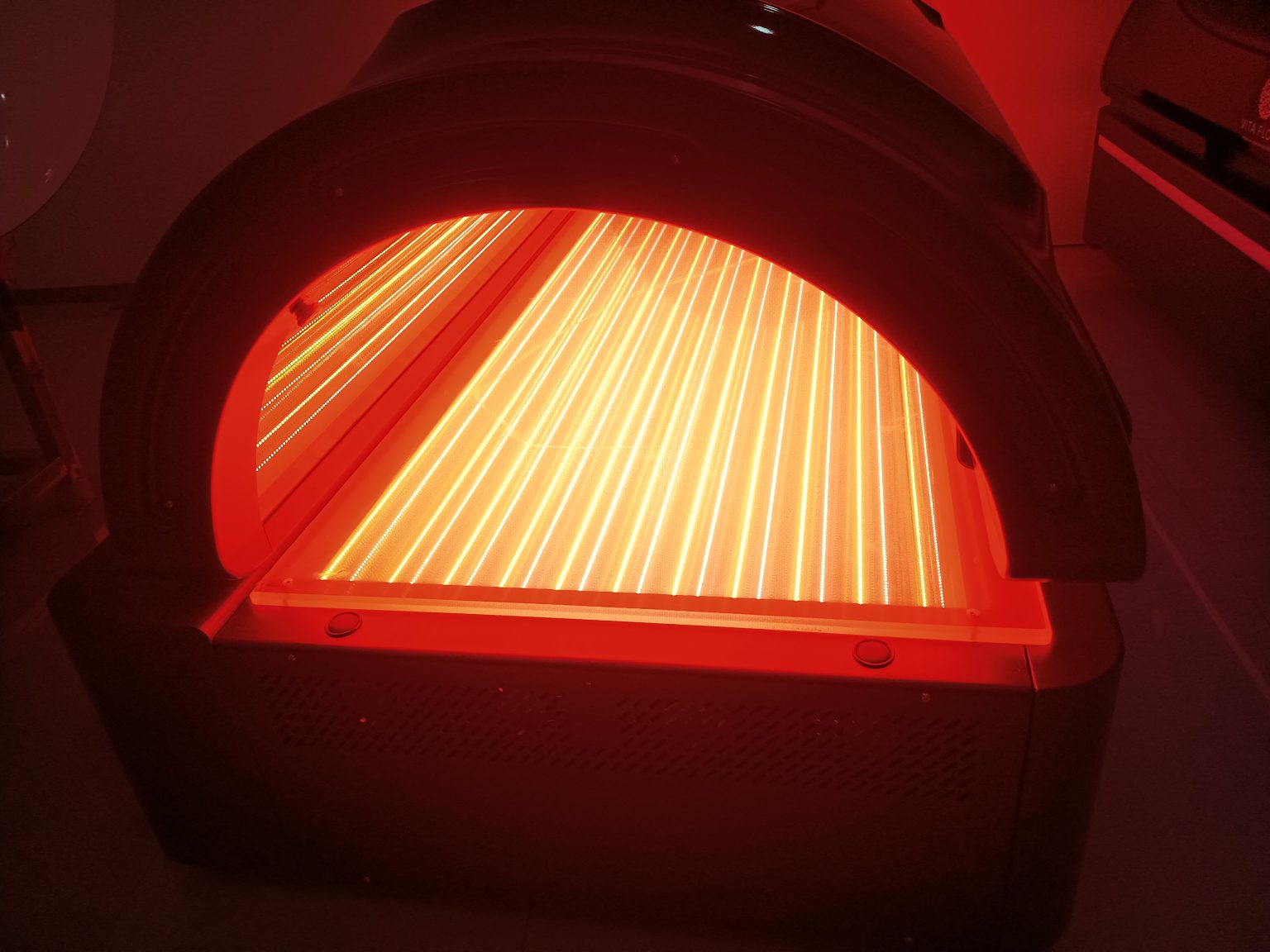
Deeper Layer: Where Traditional Collagen Bed Therapy Falters
collagen bed therapy has become a go-to phrase in marketing, but in practice many setups miss the mark. I’ve audited devices that advertise skin rejuvenation yet ignore basic parameters like LED wavelength and irradiance — those are not buzzwords; they are the physics that drive photobiomodulation. When a manufacturer skims on power converters or omits pulse modulation specs, the device can under-deliver. Look, it’s simpler than you think: wrong wavelength equals wasted sessions, and inconsistent irradiance means unpredictable collagen synthesis. Clinicians and consumers often focus on session time or price while overlooking these critical specs — and that is a flaw we must fix.

Technically speaking, skin absorption curves and LED spectral output need alignment. I’ve tested units where the peak emission drifted away from the therapeutic window (around 630–660 nm for some protocols, 810–850 nm for deeper targets). That mismatch reduces effective photon delivery. Also — and this matters — thermal management and power converters affect longevity and stability. Devices may work on day one, then dim over months. We should demand clear data on irradiance (mW/cm²), duty cycle, and maintenance. If you’re picking a device or booking sessions, ask for those numbers. If providers can’t share them, be skeptical. What follows is a look at practical fixes and what the next generation should offer.
What’s the technical gap?
Forward-Looking: Case Examples and Practical Metrics
I want to be frank about where progress looks real. Some clinics now log baseline skin assessments, then match protocol to tissue depth and condition; others still use one-size-fits-all timing. In a small case example I followed, a clinic adjusted LED wavelength mix and increased irradiance slightly — and outcomes improved measurably within four weeks. That’s not magic — it’s matching dose to biology. For future outlook, manufacturers must publish irradiance decay curves, list LED wavelength tolerances, and explain pulse modulation options. Meanwhile, clinicians should track collagen bed therapy outcomes with simple metrics: baseline photos, patient-reported pain or stiffness scales, and a short functional test. These steps are low-effort and high-impact.
We can expect better standards soon. Regulators and professional bodies are starting to emphasize device transparency — which will pressure makers to test for spectral drift and supply clear maintenance guides. — funny how that works, right? For those planning purchases, I recommend three evaluation metrics: true peak wavelength accuracy, stable irradiance over time, and documented maintenance intervals. Use them as your checklist. I’ve seen devices that check two of three and still perform well; the ideal is all three. That combination gives you replicable sessions and fewer surprises down the road.
What’s Next
To close, let me offer three concise evaluation metrics I use personally when assessing red light solutions: 1) Peak wavelength and spectral bandwidth (is the emission centered where biology needs it?), 2) Measured irradiance at typical treatment distance (mW/cm²), and 3) Evidence of long-term stability (decay curves, power converter specs, and maintenance schedule). These are concrete. They save time. They save money. They improve outcomes. We must move past marketing lines and insist on numbers. If a vendor balks, that tells me enough. I want you to leave the clinic confident, not guessing — and that’s why transparency matters. For responsible manufacturers and clinics doing it right, I recommend checking innovations and support at Magique Power. — but here’s the catch: always pair device specs with a plan tailored to the person in front of you.