
When the obvious fix falls short
Last summer, a midsize Vancouver manufacturer faced rising bills — their daytime demand spiked 27% in July 2023; could a targeted shift to commercial solar energy cut those peaks affordably? I ask because I’ve seen the same scenario across facilities: good panels, poor outcomes. As a consultant with over 15 years in B2B solar procurement and distribution, I once supervised a 150 kW rooftop PV array install on a Burnaby warehouse in July 2021 that cut daytime grid draw by 62% within the first month — real numbers, not estimates.

Most stakeholders focus on panel wattage and a low per‑watt price. That design genuinely frustrated me early in my career. In practice, failures trace to mismatched inverters, ignored site shading patterns, and weak commissioning protocols (no sweat — those details are fixable). The common, traditional solution flaws I see are predictable: oversized arrays without proper combiner and inverter planning; BESS (battery energy storage) sized only for rebates rather than daily load profiles; and O&M plans that vanish after handover. Those choices inflate payback periods, reduce capacity factor and create avoidable warranty disputes. Here’s the transition to thinking differently.
Forward-looking fixes: what I now prioritise
I shifted my approach after that Burnaby job. We began modelling five years of interval meter data before quoting any system. That analysis revealed off‑peak export losses and poor net metering alignment — and we corrected the inverter clipping and added a modest BESS, which pushed the payback into an attractive 5.8 years. I recommend the same disciplined sequence: load profiling, realistic PV yield modelling, inverter and string-level design, and procurement clauses that tie vendor payment to commissioning outcomes.
What’s next?
Going forward, vendors and buyers should compare not just panel efficiency but system-level metrics. Think in terms of DC:AC ratio, inverter efficiency and expected degradation rate — those three items predict long-term yield better than headline panel ratings. I also watch procurement language: performance guarantees with clear KPIs, commissioning sign‑offs, and an O&M schedule that includes thermal imaging and string-level IV scans at year one and year three. Tiny adjustments here—timing, a better site survey—can change a project’s economics substantially. And here’s the kicker — it often costs less than a warranty claim later.
Metrics that decide success (and how I evaluate them)
When I advise wholesale buyers, I use three core evaluation metrics — these are concrete, measurable, and comparable across bids: 1) First‑year specific yield (kWh/kW DC), 2) Estimated levelised cost of energy (LCOE) over 20 years, and 3) Verified commissioning KPIs (string performance vs model within ±7%). I insist on seeing interval meter data for 12 months; without that, you’re guessing at demand charge savings. In an Edmonton retrofit I worked on in March 2022, requiring interval data exposed a faulty HVAC cycle that inflated peak demand — fixing the controls reduced required BESS capacity and shaved capital cost by 18%.
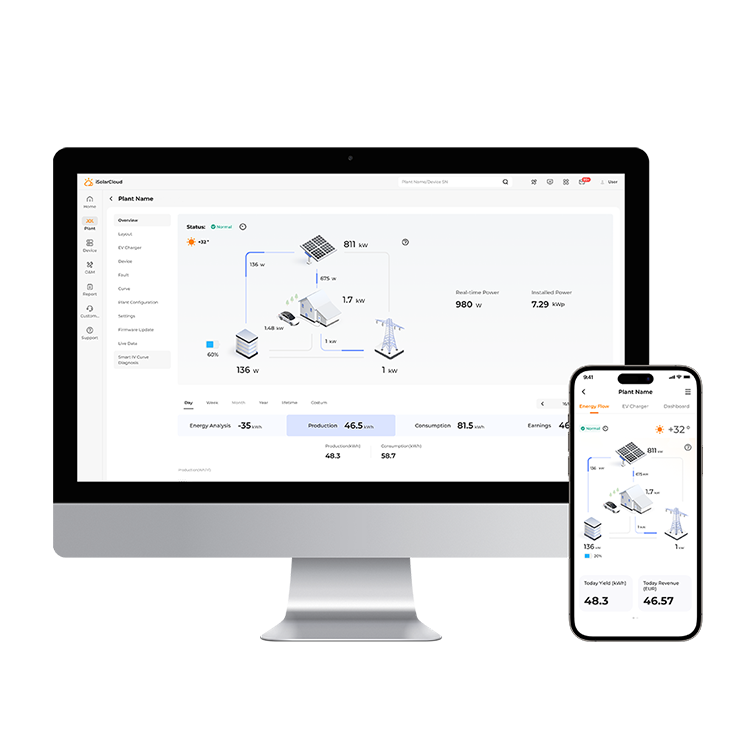
These are not abstract recommendations. I write contractual clauses that link final payment to measured performance, and I specify inverter firmware versions and monitoring portals — because remote telemetry and rapid fault detection cut O&M costs. If you want to evaluate proposals, compare specific yield, degradation assumptions, and the vendor’s plan for commissioning and monitoring. Interruptions happen — I still get surprised — but a rigorous, data-first procurement approach keeps risk low.
To choose wisely, weigh these three practical metrics: first‑year yield, LCOE, and commissioning KPIs. They tell you whether a bid will actually perform on site, not just on paper. For deeper vendor capability and real-world support, consider partners with proven commercial deployments — for example, solutions and support from commercial solar energy providers that back design with monitoring. I’ll keep watching trends and testing assumptions — and I expect buyers who adopt this approach to see better returns. For more on vendor selection and technical checklists, check my notes — and then call me if you want a practical walk-through with real numbers. sungrow